MARCH 3, 2026
CONTACT: stopthehermantowndatacenter@gmail.com
Google Needs to Find a More Suitable Location for Its Hyperscale Data Center Proposed in Hermantown: Residents React to Ownership Announcement
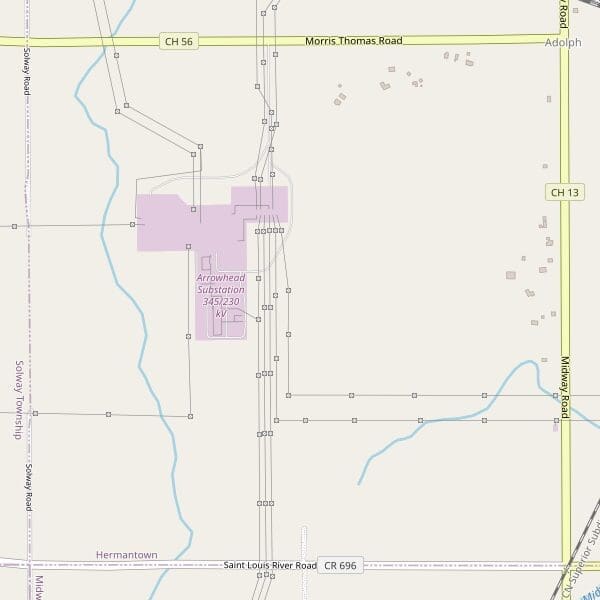
Citizen groups note that nothing has changed with Google’s announcement of ownership of the proposed data center in Hermantown. The project is not yet permitted, there is ongoing litigation regarding woefully insufficient environmental review, and 78% of the proposed site remains privately owned. Residents note that the subversion of the democratic process does not constitute a win-win situation for immediately affected residents. Residents feel that their local and state governments have betrayed residents of Hermantown, Solway, Midway, Adolph and surrounding areas. Many residents will be deeply hurt financially, physically, and mentally. Their government has left them open for exploitation by a big tech company.
“Stop the Hermantown Data Center is the voice for the neighborhood and the community. We speak on behalf of thousands of concerned residents. Now that Google has knocked on our door, we want them to know that we still plan on making them accountable. We expect that they will do a proper environmental review prior to applying for permits and respect the legal process currently underway. We encourage them to look at the history of this project and learn that the proposed site was rezoned under false pretenses. We encourage Google to do the right thing by finding a site more suitable than a project of this size. The Adolph area is not the right place, with hundreds of residents, children and families, generations of agricultural and farming lands, hundreds-old growth oak trees, prairielands, wetlands, abundant wildlife, and designated trout streams.”
SHDC urges local and state officials to pause hyperscale data development in Minnesota until regulatory gaps, including environmental and public health impacts, are fully assessed and addressed. Further, pausing the projects versus unanimous approval, is needed to allow for several lawsuits to settle concerning the proposed data center project. Concerns of local citizens have been ignored by local, county, and state officials who signed non-disclosure agreements.
To learn more about the efforts of SHDC visit https://Stopthehermantowndatacenter.org or visit SHDC’s Facebook page.

❤️Found a legal loophole❤️
💕Supreme administrative court💕
https://en.wikipedia.org/wiki/Supreme_administrative_court
💕The court And constitutional interpretation💕
https://www.supremecourt.gov/about/constitutional.aspx
jurisdiction of a constitutional court
§ 27. Natural resources and the public estate.
The people have a right to clean air, pure water, and to the
preservation of the natural, scenic, historic and esthetic
values of the environment. Pennsylvania’s public natural
resources are the common property of all the people, including
generations yet to come. As trustee of these resources, the
Commonwealth shall conserve and maintain them for the benefit of
all the people.
(May 18, 1971, P.L.769, J.R.3)
1971 Amendment. Joint Resolution No.3 added section 27.
Due to the non disclosure of:
Any type of hazardous materials- Any solid, liquid, or gaseous material that is radioactive, toxic, explosive, flammable, corrosive, or otherwise physically or biologically threatening to health?
The Federal Bureau of investigation
Needs to be notified
https://en.wikipedia.org/wiki/Public_security
Data center water contamination stems primarily from cooling tower blowdown and chemical treatments, introducing biocides, corrosion inhibitors, high mineral content (TDS), , PFAS from refrigerants, and heavy metals (copper, zinc) into wastewater.
These pollutants to eutrophication, harm aquatic life, and overload local treatment facilities🤢😷🤒🤧🤕😵
Key Aspects of Eutrophication:
Causes: The primary cause is nutrient pollution (nitrogen and phosphorus) entering water systems, often stemming from agricultural fertilizer runoff, manure, sewage, industrial waste, and detergents.
The Process: Excess nutrients spark rapid algae growth (blooms), which block sunlight and use up oxygen as they die and decompose, creating hypoxic or “dead” zones.
Types:
Natural Eutrophication: A slow, natural aging process of lakes and ponds over centuries.
Cultural/Anthropogenic Eutrophication: Rapid, human-driven nutrient enrichment.
Effects on Environment:
Algal blooms and thick scum on the water surface.
Hypoxia (low oxygen levels) leading to fish kills and reduced biodiversity.
Loss of biodiversity and destruction of aquatic habitats.
Effects on Humans:
Health Hazards: Harmful algal blooms can produce toxins (e.g., cyanobacteria) that contaminate drinking water and seafood.
Economic Impact: Reduced commercial and recreational fishing, decreased property values, and costs for water treatment.
Recreation Loss: Unpleasant, smelly, and dangerous water conditions prevent swimming and boating.
Terrorism is
intimidate governments or societies, often to achieve political, religious, or ideological goals. It involves premeditated acts against civilians or noncombatants to influence policy, disrupt society, or generate publicity
Targets are often noncombatants, civilians, or property.
To coerce a government, population, or international organization.
Implied/Constructive: Occurs through the relationship between parties, where one dominates the other.
(Defined by dictionary definitions)
Citizens are victims of political terrorism
Key Known Contaminants & Synonyms
PFAS / “Forever Chemicals”: Fluorinated gases (F-gases), specifically hydrofluoroolefins (HFOs) and hydrochlorofluoroolefins (HCFOs) used in refrigerants.
Biocides: Agents to prevent algae/mold, such as isothiazolinones, glutaraldehyde, chlorine dioxide, and bromine.
Corrosion Inhibitors: Chemical additives including phosphates, molybdates, borates, and azoles.
Heavy Metals: Copper, zinc, lead, and chromium, originating from system corrosion.
Total Dissolved Solids (TDS): Elevated minerals and salts caused by evaporative cooling processes.
Glycols: Ethylene glycol and propylene glycol, used in cooling loops
Biological warfare is the intentional release of pathogens—bacteria, viruses, fungi, or biological toxins—to cause death or disease in humans, animals, or plants. These weapons aim to create mass casualties, panic, societal disruption, or economic loss. Use of such agents is prohibited by international law, specifically the 1972 Biological Weapons Convention. (Encyclopedia defined)
Biological warfare defense is handled by a multi-agency approach focused on detection, prevention, and response. The Department of Defense (DoD), primarily through the Defense Threat Reduction Agency (DTRA) and the U.S. Army, leads defense efforts, while the Department of Homeland Security (DHS) handles domestic biodefense, and the FBI leads criminal investigations into bioterrorism.
Yes, AI tools extensively collect user data, including prompts, behavior patterns, and voice, often retaining this information to train future models or sharing it with third parties. Data is frequently sold or shared with data brokers to develop targeted advertising. Key risks include the creation of detailed digital profiles, potential re-identification of anonymized data, and the loss of privacy from AI tools across all devices.
Yes, several political leaders and their spouses are shareholders in top artificial intelligence (AI) and tech companies, with many purchasing shares in firms like Nvidia, Apple, Microsoft, and Amazon while in office.
Are Data centers Committing acts of espionage?
And in close proximity of military bases.
This needs to be investigated by:
United Nations security council and department of homeland security
The Linwei Ding Case (2026): In one of the first major U.S. convictions for AI-related espionage, former Google engineer Linwei (Leon) Ding was found guilty on multiple counts of economic espionage and theft of trade secrets.
Theft Details: Ding downloaded over 2,000 pages of confidential information regarding Google’s AI supercomputing infrastructure, including designs for Tensor Processing Unit (TPU) chips and software platforms.
Foreign Influence: Prosecutors demonstrated that Ding was secretly working with China-based tech firms and aimed to replicate Google’s systems to attract investors for his own startup in China.
Ding downloaded over 2,000 pages of confidential information regarding Google’s AI supercomputing infrastructure,
That is remote access to all
Google utilizes a highly advanced, AI-powered system, developed with DeepMind, to autonomously control cooling systems within its data centers and supercomputing infrastructure. This system directly manages infrastructure—including cooling towers, chillers, and pumps
Yes, Google has been involved in multiple legal cases and settlements regarding the illegal, unauthorized, or deceptive collection and sharing of user data.
Incognito Mode Tracking ($5 Billion Settlement): In 2024, Google agreed to destroy billions of data records collected from users who were browsing in “Incognito” mode. The lawsuit alleged that Google continued to track and collect browsing data even when users believed they were in a private session.
Unauthorized Data Collection ($1.4 Billion Settlement): In May 2025, Google agreed to pay $1.375 billion to Texas to settle claims that the company violated user privacy by secretly collecting biometric data, tracking user movements, and scanning voiceprints without proper consent.
Smartphone Snooping Lawsuit ($425 Million+): As of September 2025, a federal jury ordered Google to pay over $425 million for improperly snooping on user smartphone activity over a decade, with claims that data was used to sell targeted ads without user permission.
Antitrust Data Sharing Ruling (2025): A US federal judge ruled that Google acted as an illegal monopolist and, as part of the remedy, ordered the company to share some of its search data with competitors, noting that Google used exclusive contracts to dominate the market.
Android Data Settlement ($135 Million): A $135 million settlement was reached, slated for April 2026, over claims that Google illegally collected data from Android phones even when users closed apps or locked their screens.
Friday, January 30, 2026
a federal jury in San Francisco convicted former Google software engineer Linwei Ding, also known as Leon Ding, 38, on seven counts of economic espionage and seven counts of theft of trade secrets for stealing thousands of pages of confidential information containing Google’s trade secrets related to artificial intelligence technology for the benefit of the People’s Republic of China (PRC). The jury’s verdict follows an 11-day trial before U.S. District Judge Vince Chhabria for the Northern District of California.
Threat Intelligence
Exposing the Undercurrent: Disrupting the GRIDTIDE Global Cyber Espionage Campaign
February 25, 2026
Google Threat Intelligence Group (GTIG), Mandiant, and partners took action to disrupt a global espionage campaign targeting telecommunications and government organizations in dozens of nations across four continents.
Essential Information:
Taiwan Semiconductor Manufacturing Co. (TSMC) filed a lawsuit in Taiwan’s Intellectual Property and Commercial Court against its former Senior Vice President, Wei-Jen Lo, who retired in July 2025 after a 21-year tenure. Lo joined Intel as an Executive Vice President in October 2025, a fact he did not disclose to TSMC during his exit interview. During his time at TSMC, Lo signed both non-disclosure and non-compete agreements. Although reassigned in March 2024 from direct management of R&D teams to a corporate strategy role, Lo maintained contact with engineers working on advanced process technologies, including upcoming 5 nm, 3 nm, and 2 nm nodes. Taiwanese authorities have opened a national-security investigation related to potential misuse or transfer of TSMC’s trade secrets.
https://www.linkedin.com/posts/jeffcooper_tsmc-files-lawsuit-against-former-executive-activity-7399474232046436353-5yWH
Key Insight:
TSMC’s lawsuit highlights the serious risks of intellectual property leakage from one of the industry’s most critical players amid intense global semiconductor competition, particularly as technology leadership pivots on highly confidential node advancements.
Background:
Wei-Jen Lo, who began his career with Intel, joined TSMC in 2004 and was promoted to Senior Vice President responsible for advanced process technology roadmaps by 2014. He played a key role in the development and rollout of high-performance manufacturing nodes critical to modern semiconductor devices. In 2024, he transitioned to advising TSMC’s CEO on corporate strategy but continued gathering updates from R&D personnel. TSMC contends he breached contractual and legal obligations by failing to disclose his intention to join Intel, potentially compromising the company’s core technological assets. This legal action occurs amidst heightened efforts by Taiwan to safeguard its semiconductor industry’s intellectual property and national security